Management culture or workplace culture has been emphasized here and there in businesses and corporations, including those in my town.
Defining or describing the management culture at Volunteers of America, Wyoming-Montana, with offices in Sheridan, Wyoming, is slightly less easy than nailing Jello to a tree.
Maintaining the image of the organization has taken over the management style of the CEO and one of his VP’s such that anything of real concern or value must pass muster with the organization’s image. Even their image of the community’s image of them is distorted.
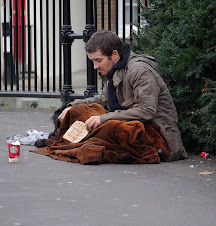
In this kind of culture, it is no wonder that valid questions about the treatment of vulnerable people at their homeless shelter would lead to defense and denial. It is not possible in their wildest dreams that they have a shelter director who shreds people like no-longer-needed documents.
“Bad things just don’t happen in this organization,” I can hear the CEO beaming at his leadership team all cherubic and artificially comfortable.
I attended a leadership retreat of VOA, and should have known then that the shelter director’s take-charge, interrupt and mow-down style had some sort of validating source. When you ask someone to give a presentation to the group, you shouldn’t interrupt them and help them make their points. When someone raises a concern, you should not turn your back on them and treat them as though they had not spoken.
His veep is worse. I will never forget the forgettable meeting we had with him in Buffalo where he spent a good 20 minutes telling us we were not a non-profit organization, but a not-for-profit one. (I may have reversed these, as the nonsensical blathering never quite solidified in my head.) While there is a distinction in the terms, we were forced to watch and listen as he slowly descended into lunacy. You get used to that after a while.
The integrity of an organization starts at the top and is directed by administration. Integrity asks what part of your organization melts like wax when heat is applied. Integrity asks whether you comply with all protocols for certification in all of your programs; do you comply with the demands and expectations of grantors who provide you funding; do you know where the men’s room is in the shelter you supposedly operate.Or, do you prefer to look like you are in charge and hoist your ego onto the table in front of you, which blocks your view of the valid perspectives of others.
The answer is obvious from an organization that does not train its staff to certification standards, does not comply with grantor expectations, and says it serves the homeless, when instead it floods the streets of Sheridan with people who have been kicked out rather than assisted, and placed on the “Not-Welcome-Back” list rather than given a toe hold on hope.
The easiest and best way to appear to be a good organization is simply to be one. VOA has lost its way thanks to its management culture and “creative” integrity.
Monday, March 17, 2008


Friday, March 14, 2008
My Letter To U.S. Senator Mike Enzi (R-WY)
March 6, 2008
Dear Senator Enzi,
I wish for your office to know that I am concerned about the undignified treatment of American veterans who seek assistance from the homeless shelter in Sheridan, Wyoming, and the shelter’s failure to fulfill its obligations with regard to its award of national VA Grant Per Diem Program monies.
The latter concern is my most salient, as I realize it is not against the law to be mean-spirited or to manage poorly.
Volunteers of America Wyoming-Montana owns and operates this shelter on the grounds of the Sheridan Veterans Administration, under the name of the VOA Sheridan Community Homeless Shelter. This grant is administered by the Department of Veterans Affairs Veterans Health Administration.
Enclosed, you will find a letter dated Feb. 14, 2008, to Roger Casey, a contact person for Grant Per Diem Program issues. In this letter I have detailed what I believe to be the failures on the part of the VOA Sheridan Community Shelter in following through with the “assurances” that are required by all grant awardees.
I have also enclosed a copy of the Feb. 26, 2008, letter I received from Grant and Per Diem Program Acting Director Chelsea Watson, in which she acknowledges my letter to Mr. Casey, and indicates she has forwarded my concerns to the appropriate VISN coordinator and liaison.
I seek your help in seeing to it that this review is a fair and accurate one, and to see that corrective measures are taken by this shelter to bring its quality of care up to the levels I am sure we all want for our defenders.
My sincerest thanks for your help in this matter.
Best regards,
Tim Cummings
Concerned Citizen
Thursday, March 13, 2008
Acting Director of VA Per Diem Program Responds To My Letter
Department of Veterans Affairs
Veterans Health Administration
Washington, DC 20420
"Dear Mr. Cummings:
"Thank you for your letter dayed February 14, 2008, expressing concerns with the Volunteers of America Wyoming, Inc. project number 03-53-WY. Your concerns will be forwarded to the VISN Homeless Coordinator (Mr. Richard DeBlasio) and the VA Liaison (Mr. Will Banks) for review. If you have any questions concerning this letter, please contact this office (toll-free) at 1-877-332-0334.
"Sincerely,
"Chelsea Watson
"Acting Director, Grant and Per Diem Program"
Note -- The VISN is the region of which the Sheridan VA is a part.
Wednesday, March 12, 2008
Letter Points Out VOA's Failure To Comply With Grant For Care Of Homeless Veterans
Mr. Roger Casey
VA Homeless Providers Grant and Per Diem Program
Mental Health Strategic Healthcare Group (116E)
VAHQ
810 Vermont Avenue, NW
Washington, DC 20420
February 14, 2008
Mr. Casey,
I am concerned about the viability of an awardee of one of the per diem program grants.
The Sheridan (WY) Community Shelter, operated by Volunteers of America Wyoming-Montana, has not, in my opinion, followed through with the “reasonable assurances” clause in the grant.
Nor has the shelter provided any transitional housing as part of its program.
Nor has anything been done to provide follow-up services to help veterans achieve stability once they have acquired permanent housing.
Nor does the shelter director allow veterans to make their own program decisions regarding individual goals. They are bullied into accepting conditions forced upon them under the constant threat of being kicked out.
The “reasonable assurance” that not more than 25 percent of participants at any one time will be non-veterans was not attempted in the calendar year of 2007. At the time, I was assigned as the per diem service coordinator at the Sheridan Community Shelter. I was initially told, in November 2006, that I would be in charge of consulting and programming with veterans only. By January of 2007, this had been abandoned, and I was placed in charge of seeing to the programs of all shelter residents by my supervisor. Fully half of my time in the per diem position was spent working with non-veterans. I enjoyed the work, of course, but I believe the per diem “assurances” were consciously ignored.
Transitional housing, if it exists at all at the Sheridan shelter, is only on paper. One room with two beds in it at the shelter was designated “transitional,” but the residents there are given no additional responsibilities or training for moving into their own living situation. Their program is no different from anyone else’s back in the men’s dormitory. There is certainly nothing being done to establish transitional housing outside of the walls of the shelter. If the per diem grant assumes progress in the area of transitional living, no such progress exists.
There is no follow-up on the part of the shelter with veterans who have acquired permanent housing. Once they leave the threshold of the shelter, they are left out of contact, unless they have to return to the shelter because their living situation failed somehow. They are placed in a sink-or-swim situation with no further assistance offered through the per diem awardee.
Programming and goals are dictated to the veteran by the shelter director. Most of these vulnerable individuals simply accept their fate at the shelter, because they need a place to live. Also, veterans are routinely kicked out of the shelter and placed on a “not-welcome-back” list, which certainly stops the flow of care, while the grant monies continue.
I am writing you to find out whether the items above, which I consider improprieties with regard to conditions expected from the per diem grant award, are in fact improprieties. If so, how will your office address these? If not, please assist me where I am misunderstanding this.
I contend that the Sheridan Community Homeless Shelter is not a viable recipient of per diem grant money based on the abuses of conditions as listed above. The shelter is out of compliance, and should either stop its pretence or comply.
I realize that care for the homeless veteran population is currently a public issue and an emotional one. In light of this, I question whether the duplication of services between the Sheridan VA Domiciliary and the Sheridan Community Shelter should result in a rating high enough to award per diem grant funding to a corporation that also does not fulfill the apparent expectations of the grantor.
Sincerely,
Tim Cummings
Concerned Citizen
Tuesday, March 11, 2008
Attention To Social Injustice Growing, But Not As Fast As Social Injustice
Early today it was announced that the Vatican has “updated” aspects of sin with fresh attention placed on, among other things, a persistently broadening gap between the rich and the poor.
The Associated Press story from Vatican City was fraught with an undertow of an attempt a light humor, and not very graciously done. “The Church has announced a list of new sins,” nudge, nudge, har har.
Stupid journalists. I used to be one. I have repented.
The AP reported on Sunday’s edition of L’Osservatore Romano, which quotes Monsignor Giafranco Girotti on what amounts to fresh attention, or emphasis, on issues that are considered offensive to God (and therefore, sins):
VATICAN CITY (AP) - In olden days, the deadly sins included lust, gluttony and greed. Now, the Catholic Church says pollution, mind-damaging drugs and genetic experiments are on its updated thou-shalt-not list. Also receiving fresh attention by the Vatican was social injustice, along the lines of the age-old maxim: "The rich get richer while the poor get poorer."
… "If yesterday sin had a rather individualistic dimension, today it has a weight, a resonance, that's especially social, rather than individual," said Girotti, whose office deals with matters of conscience and grants absolution.
… "The poor are always becoming poorer and the rich ever more rich, feeding unsustainable social injustice," Girotti said in the interview published Sunday.
This last, about “unsustainable social injustice,” certainly applies to the homeless anywhere in the world. Their plight is not well-understood. Their existence is only absently noted by the passing world. Their innate dignity and worthiness as persons is somehow in a weird discount bin in our minds.
The homeless are spoken of as people who have other options, so they have an obvious need to get smarter, or get motivated, or just get on down the road and don’t embarrass this or that community with your want.
In fact, the vast majority of homeless people in America have played out all their options, and they need a hand, or an advocate.
In my town, all the social agencies are bumping into the emergence of a housing shortage caused by a certain amount of economic booming in the area. Although we are a small community (15,000) we have seen up-close and personal the effect of our own “unsustainable social injustice,” as some few get on the gravy train of progress, and many others are left at the station to decide where to sleep tonight. Many of our households have had long-term guests staying on couches, sparerooms, basements and vehicles of friends and relatives. I have a son-in-law-to-be living in my basement while he and my daughter search on for an apartment to live in after the wedding in May. Technically, I have a homeless young man living downstairs where we keep the cats’ food … and box.
We have come to depend on agencies and corporations and even churches to take care of our poorly-housed. The problem is pervasive enough that each of us is going to have to lend a hand.
This could mean a shift in attitude is the first order of business.
The question is not, “What is wrong with those people?”
Noted author (and Catholic convert) G.K. Chesterton was among several writers of his time who were asked to submit an essay on the subject, “What is wrong with the world.”
Chesterton’s response was succinct: “Dear Sir, I am.”
Monday, March 10, 2008
Trying To Be Nicer, But So Difficult To Turn Away
As a man who feels deeply and thoroughly commissioned by God as a missionary of Divine mercy, I recognize complications in my role as a “foul-caller” regarding the pathetic treatment of people seeking assistance from my town’s homeless shelter where I worked for a year and saw ridiculous undignified and disrespectful treatment launched against scores of people, and tried to tone down the impact of this offensive conduct against vulnerable people.
You see how easy it is for me to use “Divine mercy” and “ridiculous” “offensive conduct” in the same sentence.
That is, indeed, the complication. On the one hand I am bound by faith and conscience to express the mercy of God. On the other, I am bound by faith and conscience to speak up when I observe injustice against another. The former involves the sanctity of my responsibility to God, and the latter involves my responsibility to the sanctity of life as flows out of my relationship with God.
These don’t ride together very comfortably in the backseat of my car.
Some of my advisors – very helpful and wonderful people in my life – want me to nicen things up. I like being liked, but this wrong-doing at the shelter is too horrible to turn away from.
I still need to deal with a question: What is the role of a man of mercy who sees Person A beating Person B? Stop the beating? I think so.
I believe that the person or people responsible for bewilderingly poor treatment of people at the Volunteers of America Sheridan Community Homeless Shelter have perhaps slowed down and thought twice before treating vulnerable people dismissively, patronizingly, and even unauthorizedly and unadvisedly diagnosing people as being mentally ill … to their faces.
They are being watched. This is a good thing. Maybe 2008 will only be half as cruel as was 2007, or 2006, or 2005, or …
Saturday, March 8, 2008
The Third Homless Person I Ever Met -- Part 2
I was 25, and all the college kids with me were 19-23. Kyle was just a little older than I was, but he was certainly the interesting person among us. The students really had no idea that people lived like Kyle did. The kids were all career-bound, taking a big break out of their summer to spend a month in the mountains at Bear Trap Ranch.
My carload of people thought it was pretty neat that we had brought Kyle with us. The manager and staff of Bear Trap Ranch were not as impressed.
I was hauled into the office and exposed to words like “dangerous,” and “quiet,” and “unpredictable,” and “shouldn’t have.”
I said I would take full responsibility for Kyle’s behavior for the days he would be with us (Saturday evening through Friday morning).
I advised Kyle to relax and to try to absorb the scenery and the kind spirits of the people around him. He was welcome to attend our Bible studies and worship times, most of which he elected to bypass. I also told him that if he became uncomfortable with anyone or with the camp in general, I would run him back downtown.
The Old Stage Road, which was in fair shape for a dirt road, didn’t make this a very easy trip, but it could be done with good shocks on a dry day.
We did all we could to learn what had caused Kyle’s situation, but it was a real tangle of bad luck, irresponsibility, the wrong friends, drug abuse, parents washing their hands of him, lack of communication, and, ultimately, no one who was good for him in his life.
In a few days we were to drop off Kyle in the Springs, and in a few more days, all of us at the camp would be packing to return to where we came from.
I wanted to see Kyle’s life get turned around in less than six days, and knew it was impossible. What was a young man like me, who carried with him the mercy of God, to do in light of Kyle’s very foreign-seeming and broken life. My answer was, “everything I can,” even though the “everything” didn’t come in a very big container.
We all pitched in some cash and I was to give it to Kyle when I dropped him off. I had called several social services to see if anyone could follow up with this guy. There was a shelter of some sort operated by a big man who bought his T-shirts too small.
I was alone with Kyle when I took him to this shelter.
He said he didn’t want to go there.
I didn’t ask why. I just said, “Where to, then?”
“Bus station, I guess.”
“The kids have $200 for you,” I said.
Back then that was a month’s rent.
Kyle said thanks, and I drove him to the bus station. I went in with him to say goodbye.
“What will you do?” I asked.
“I don’t know,” he said, smiling. “I never know.”
We shook hands and I stepped back to leave.
“You’ve been good to me,” he said.
“You’ve been good for me,” I said.
Subscribe to:
Posts (Atom)