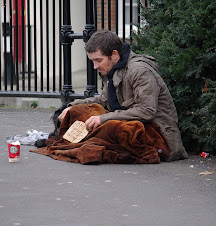
I see one of the organizations in my town is having a fund-raiser and giving part of its cash to the homeless shelter.
I am pleased that my community gives evidence that it cares about the homeless in our area. A healthy community reaches out to its own.
Any thinking person who wants to help the homeless in their community would conclude that donating to the homeless shelter would be a logical step.
There are a couple of things wrong here, however. First, this particular shelter has such a bizarre and destructive approach to people that it is worse than having no shelter at all. We would be better off as a community to halt any further support until the innate dignity and worth of the individuals seeking assistance there is restored, and people are no longer dismissed by the whims of the director, or discounted as valuable people, or told to their faces that they are mentally ill.
Of nearly every male in the shelter, while I was there, the director would remark, “There goes a sad, sick little man.”
Also wrong in this scenario is that the shelter is the stopping place for thinking about the homeless.
Because of the shelter’s poor and erratic treatment of people, the community is flooded with individuals who are making do in motels, a friend’s couch, or settling for meager shelter sometimes in rooms no bigger than a bed. These people are not being cared for, and any monies given to the shelter will not reach the under-sheltered and the under-assisted who are trying to kick-start a life here.
Our worse-than-nothing homeless shelter is not the only way to reach out with donations. In fact, giving money to this shelter is ultimately like giving away free packs of cigarettes in the name of cancer research.
Some of these people eat at the Lunch Together soup kitchen program in the basement of one of our downtown churches. Some of these people are a month’s rent, or less, away from acquiring a decent apartment. Some of these people are short the few dollars to get an ID card, or to get a certified copy of their birth certificate, or to restore a driver’s license.
Why not work with a property manager to provide a needy person or couple or family with the first month’s rent and/or deposit required to get into a place. This alone stops many from going any further in their quest for a place to live. Why not give money to Lunch Together, which does not have a multimillion-dollar budget, the bulk of which is made up of grants.
My community needs to realize that the homeless shelter in this town does not help the homeless. Although it truly feels good to give money to such a cause, in reality, donations help the shelter continue to hurt people.
Showing posts with label helping tips. Show all posts
Showing posts with label helping tips. Show all posts
Thursday, March 20, 2008


Tuesday, March 11, 2008
Attention To Social Injustice Growing, But Not As Fast As Social Injustice
Early today it was announced that the Vatican has “updated” aspects of sin with fresh attention placed on, among other things, a persistently broadening gap between the rich and the poor.
The Associated Press story from Vatican City was fraught with an undertow of an attempt a light humor, and not very graciously done. “The Church has announced a list of new sins,” nudge, nudge, har har.
Stupid journalists. I used to be one. I have repented.
The AP reported on Sunday’s edition of L’Osservatore Romano, which quotes Monsignor Giafranco Girotti on what amounts to fresh attention, or emphasis, on issues that are considered offensive to God (and therefore, sins):
VATICAN CITY (AP) - In olden days, the deadly sins included lust, gluttony and greed. Now, the Catholic Church says pollution, mind-damaging drugs and genetic experiments are on its updated thou-shalt-not list. Also receiving fresh attention by the Vatican was social injustice, along the lines of the age-old maxim: "The rich get richer while the poor get poorer."
… "If yesterday sin had a rather individualistic dimension, today it has a weight, a resonance, that's especially social, rather than individual," said Girotti, whose office deals with matters of conscience and grants absolution.
… "The poor are always becoming poorer and the rich ever more rich, feeding unsustainable social injustice," Girotti said in the interview published Sunday.
This last, about “unsustainable social injustice,” certainly applies to the homeless anywhere in the world. Their plight is not well-understood. Their existence is only absently noted by the passing world. Their innate dignity and worthiness as persons is somehow in a weird discount bin in our minds.
The homeless are spoken of as people who have other options, so they have an obvious need to get smarter, or get motivated, or just get on down the road and don’t embarrass this or that community with your want.
In fact, the vast majority of homeless people in America have played out all their options, and they need a hand, or an advocate.
In my town, all the social agencies are bumping into the emergence of a housing shortage caused by a certain amount of economic booming in the area. Although we are a small community (15,000) we have seen up-close and personal the effect of our own “unsustainable social injustice,” as some few get on the gravy train of progress, and many others are left at the station to decide where to sleep tonight. Many of our households have had long-term guests staying on couches, sparerooms, basements and vehicles of friends and relatives. I have a son-in-law-to-be living in my basement while he and my daughter search on for an apartment to live in after the wedding in May. Technically, I have a homeless young man living downstairs where we keep the cats’ food … and box.
We have come to depend on agencies and corporations and even churches to take care of our poorly-housed. The problem is pervasive enough that each of us is going to have to lend a hand.
This could mean a shift in attitude is the first order of business.
The question is not, “What is wrong with those people?”
Noted author (and Catholic convert) G.K. Chesterton was among several writers of his time who were asked to submit an essay on the subject, “What is wrong with the world.”
Chesterton’s response was succinct: “Dear Sir, I am.”
The Associated Press story from Vatican City was fraught with an undertow of an attempt a light humor, and not very graciously done. “The Church has announced a list of new sins,” nudge, nudge, har har.
Stupid journalists. I used to be one. I have repented.
The AP reported on Sunday’s edition of L’Osservatore Romano, which quotes Monsignor Giafranco Girotti on what amounts to fresh attention, or emphasis, on issues that are considered offensive to God (and therefore, sins):
VATICAN CITY (AP) - In olden days, the deadly sins included lust, gluttony and greed. Now, the Catholic Church says pollution, mind-damaging drugs and genetic experiments are on its updated thou-shalt-not list. Also receiving fresh attention by the Vatican was social injustice, along the lines of the age-old maxim: "The rich get richer while the poor get poorer."
… "If yesterday sin had a rather individualistic dimension, today it has a weight, a resonance, that's especially social, rather than individual," said Girotti, whose office deals with matters of conscience and grants absolution.
… "The poor are always becoming poorer and the rich ever more rich, feeding unsustainable social injustice," Girotti said in the interview published Sunday.
This last, about “unsustainable social injustice,” certainly applies to the homeless anywhere in the world. Their plight is not well-understood. Their existence is only absently noted by the passing world. Their innate dignity and worthiness as persons is somehow in a weird discount bin in our minds.
The homeless are spoken of as people who have other options, so they have an obvious need to get smarter, or get motivated, or just get on down the road and don’t embarrass this or that community with your want.
In fact, the vast majority of homeless people in America have played out all their options, and they need a hand, or an advocate.
In my town, all the social agencies are bumping into the emergence of a housing shortage caused by a certain amount of economic booming in the area. Although we are a small community (15,000) we have seen up-close and personal the effect of our own “unsustainable social injustice,” as some few get on the gravy train of progress, and many others are left at the station to decide where to sleep tonight. Many of our households have had long-term guests staying on couches, sparerooms, basements and vehicles of friends and relatives. I have a son-in-law-to-be living in my basement while he and my daughter search on for an apartment to live in after the wedding in May. Technically, I have a homeless young man living downstairs where we keep the cats’ food … and box.
We have come to depend on agencies and corporations and even churches to take care of our poorly-housed. The problem is pervasive enough that each of us is going to have to lend a hand.
This could mean a shift in attitude is the first order of business.
The question is not, “What is wrong with those people?”
Noted author (and Catholic convert) G.K. Chesterton was among several writers of his time who were asked to submit an essay on the subject, “What is wrong with the world.”
Chesterton’s response was succinct: “Dear Sir, I am.”
Saturday, March 8, 2008
The Third Homless Person I Ever Met -- Part 2
I was 25, and all the college kids with me were 19-23. Kyle was just a little older than I was, but he was certainly the interesting person among us. The students really had no idea that people lived like Kyle did. The kids were all career-bound, taking a big break out of their summer to spend a month in the mountains at Bear Trap Ranch.
My carload of people thought it was pretty neat that we had brought Kyle with us. The manager and staff of Bear Trap Ranch were not as impressed.
I was hauled into the office and exposed to words like “dangerous,” and “quiet,” and “unpredictable,” and “shouldn’t have.”
I said I would take full responsibility for Kyle’s behavior for the days he would be with us (Saturday evening through Friday morning).
I advised Kyle to relax and to try to absorb the scenery and the kind spirits of the people around him. He was welcome to attend our Bible studies and worship times, most of which he elected to bypass. I also told him that if he became uncomfortable with anyone or with the camp in general, I would run him back downtown.
The Old Stage Road, which was in fair shape for a dirt road, didn’t make this a very easy trip, but it could be done with good shocks on a dry day.
We did all we could to learn what had caused Kyle’s situation, but it was a real tangle of bad luck, irresponsibility, the wrong friends, drug abuse, parents washing their hands of him, lack of communication, and, ultimately, no one who was good for him in his life.
In a few days we were to drop off Kyle in the Springs, and in a few more days, all of us at the camp would be packing to return to where we came from.
I wanted to see Kyle’s life get turned around in less than six days, and knew it was impossible. What was a young man like me, who carried with him the mercy of God, to do in light of Kyle’s very foreign-seeming and broken life. My answer was, “everything I can,” even though the “everything” didn’t come in a very big container.
We all pitched in some cash and I was to give it to Kyle when I dropped him off. I had called several social services to see if anyone could follow up with this guy. There was a shelter of some sort operated by a big man who bought his T-shirts too small.
I was alone with Kyle when I took him to this shelter.
He said he didn’t want to go there.
I didn’t ask why. I just said, “Where to, then?”
“Bus station, I guess.”
“The kids have $200 for you,” I said.
Back then that was a month’s rent.
Kyle said thanks, and I drove him to the bus station. I went in with him to say goodbye.
“What will you do?” I asked.
“I don’t know,” he said, smiling. “I never know.”
We shook hands and I stepped back to leave.
“You’ve been good to me,” he said.
“You’ve been good for me,” I said.
My carload of people thought it was pretty neat that we had brought Kyle with us. The manager and staff of Bear Trap Ranch were not as impressed.
I was hauled into the office and exposed to words like “dangerous,” and “quiet,” and “unpredictable,” and “shouldn’t have.”
I said I would take full responsibility for Kyle’s behavior for the days he would be with us (Saturday evening through Friday morning).
I advised Kyle to relax and to try to absorb the scenery and the kind spirits of the people around him. He was welcome to attend our Bible studies and worship times, most of which he elected to bypass. I also told him that if he became uncomfortable with anyone or with the camp in general, I would run him back downtown.
The Old Stage Road, which was in fair shape for a dirt road, didn’t make this a very easy trip, but it could be done with good shocks on a dry day.
We did all we could to learn what had caused Kyle’s situation, but it was a real tangle of bad luck, irresponsibility, the wrong friends, drug abuse, parents washing their hands of him, lack of communication, and, ultimately, no one who was good for him in his life.
In a few days we were to drop off Kyle in the Springs, and in a few more days, all of us at the camp would be packing to return to where we came from.
I wanted to see Kyle’s life get turned around in less than six days, and knew it was impossible. What was a young man like me, who carried with him the mercy of God, to do in light of Kyle’s very foreign-seeming and broken life. My answer was, “everything I can,” even though the “everything” didn’t come in a very big container.
We all pitched in some cash and I was to give it to Kyle when I dropped him off. I had called several social services to see if anyone could follow up with this guy. There was a shelter of some sort operated by a big man who bought his T-shirts too small.
I was alone with Kyle when I took him to this shelter.
He said he didn’t want to go there.
I didn’t ask why. I just said, “Where to, then?”
“Bus station, I guess.”
“The kids have $200 for you,” I said.
Back then that was a month’s rent.
Kyle said thanks, and I drove him to the bus station. I went in with him to say goodbye.
“What will you do?” I asked.
“I don’t know,” he said, smiling. “I never know.”
We shook hands and I stepped back to leave.
“You’ve been good to me,” he said.
“You’ve been good for me,” I said.
Friday, March 7, 2008
The Third Homeless Person I Ever Met -- Part I
The third homeless person I ever met was Kyle.
It was 1982. I was two years out of college.
I was working at a month-long Christian discipleship camp for college students in the mountains west of Colorado Springs, Colo. Not far from Cripple Creek.
We spent some of our time talking to people in town. My group usually went to the town center – at the time a small park square, where a lot of drugs were dealt. Among us, we called it “The Pharmacy.”
You could watch kids with thick rolls of cash being passed to a guy who gave a nod to a guy on the other side of the park, etc.
Kyle wasn’t dealing, as he had no money. I talked to him behind a smoky sandwich grill and he told me he was homeless.
“What do you mean you are homeless?” I asked.
“I got no place to live,” he said.
“Well, where do you stay?”
“Me and some friends are staying in a vacant house right now… We broke in.” He answered my next question.
“What if you get caught?”
“Then I will stay in jail for a while, I guess.”
I have to admit, I was still naïve on the issue of homelessness. I had parents and grandparents and cousins and a girl friend and friends all over me, and none of them would let me drop to zero as far as living options. Didn't everybody have this?
I understand that, in the Orient, people who fall into the cracks for whatever reason are not expected to “insult” or “inconvenience” their family by seeking assistance for them. In their culture, this is not an acceptable option. Many of the homeless I have worked with have a similar situation – families and personal relationships are so broken up that no help is available from home. The situations are very different, but the outcome is the same.
Kyle was such a one. His “family” was made up of the strangers with which he shared a vacant house.
Kyle and I spent most of the afternoon together. I introduced him to some of the kids in my group. There was some level of trust built between Kyle and the group, such that I told him we were living at a lodge and some cabins in the mountains, and would he like to come with us and spend a few days.
Kyle said yes.
Continued tomorrow …
It was 1982. I was two years out of college.
I was working at a month-long Christian discipleship camp for college students in the mountains west of Colorado Springs, Colo. Not far from Cripple Creek.
We spent some of our time talking to people in town. My group usually went to the town center – at the time a small park square, where a lot of drugs were dealt. Among us, we called it “The Pharmacy.”
You could watch kids with thick rolls of cash being passed to a guy who gave a nod to a guy on the other side of the park, etc.
Kyle wasn’t dealing, as he had no money. I talked to him behind a smoky sandwich grill and he told me he was homeless.
“What do you mean you are homeless?” I asked.
“I got no place to live,” he said.
“Well, where do you stay?”
“Me and some friends are staying in a vacant house right now… We broke in.” He answered my next question.
“What if you get caught?”
“Then I will stay in jail for a while, I guess.”
I have to admit, I was still naïve on the issue of homelessness. I had parents and grandparents and cousins and a girl friend and friends all over me, and none of them would let me drop to zero as far as living options. Didn't everybody have this?
I understand that, in the Orient, people who fall into the cracks for whatever reason are not expected to “insult” or “inconvenience” their family by seeking assistance for them. In their culture, this is not an acceptable option. Many of the homeless I have worked with have a similar situation – families and personal relationships are so broken up that no help is available from home. The situations are very different, but the outcome is the same.
Kyle was such a one. His “family” was made up of the strangers with which he shared a vacant house.
Kyle and I spent most of the afternoon together. I introduced him to some of the kids in my group. There was some level of trust built between Kyle and the group, such that I told him we were living at a lodge and some cabins in the mountains, and would he like to come with us and spend a few days.
Kyle said yes.
Continued tomorrow …
Tuesday, March 4, 2008
'Homeless' and 'Hopeless' Only One Letter Apart
Hope is a casualty of homelessness.
The photograph to the right, under the word “Broken” is worth the 1,000-plus words it would take to describe what the downcast, ashamed, lost look that this young man expresses with his face and body language.
Yet, in the face of homelessness, all is not lost. Hope does not have to throw itself under a bus. Jesus Himself was homeless for a time, and in His experience is the implicit statement that He knows the ills and the hollowness and the pain of belonging nowhere and to no one, except His Father in Heaven.
I know a man who lost his home in the Katrina storm. He told me, “Once I got through that, I figured I could get through anything.”
Then, his wife died of cancer. Again, “Once I got through that, I figured I could get through anything.”
Then, with everything he had left in a van, while driving in Florida, he was in an accident and the van caught fire.
He stood on the roadside with nothing but whatever was in his pants pockets.
“Now that I have gone through that, I can go through anything,” he said.
He had the faith and the character to embrace something larger than life as an anchor.
He had, and still has, the understanding of God’s presence, which supercedes all losses. With this, he was able to keep a hold on hope. He could have given up, but he didn’t, because he was aware of something, or Someone, larger than all his misfortune.
It is often true that someone else must come along and provide hope for the one who cannot muster it. Each of us has enough hope in us to share. No hoarding, now!
The photograph to the right, under the word “Broken” is worth the 1,000-plus words it would take to describe what the downcast, ashamed, lost look that this young man expresses with his face and body language.
Yet, in the face of homelessness, all is not lost. Hope does not have to throw itself under a bus. Jesus Himself was homeless for a time, and in His experience is the implicit statement that He knows the ills and the hollowness and the pain of belonging nowhere and to no one, except His Father in Heaven.
I know a man who lost his home in the Katrina storm. He told me, “Once I got through that, I figured I could get through anything.”
Then, his wife died of cancer. Again, “Once I got through that, I figured I could get through anything.”
Then, with everything he had left in a van, while driving in Florida, he was in an accident and the van caught fire.
He stood on the roadside with nothing but whatever was in his pants pockets.
“Now that I have gone through that, I can go through anything,” he said.
He had the faith and the character to embrace something larger than life as an anchor.
He had, and still has, the understanding of God’s presence, which supercedes all losses. With this, he was able to keep a hold on hope. He could have given up, but he didn’t, because he was aware of something, or Someone, larger than all his misfortune.
It is often true that someone else must come along and provide hope for the one who cannot muster it. Each of us has enough hope in us to share. No hoarding, now!
Monday, March 3, 2008
The Second Homeless Person I Ever Met
The second homeless person I ever met was in Chicago in the summer of 1980.
The numbers seem small and my recollection good because I grew up in a small Wyoming town of no more than 2,000 people. If you were homeless in Greybull, you would have stuck out like paisley on stripes. Everybody had a place to stay, except for the occasional hobo, who would drift into town from the railroad tracks that defined the west edge of town, and maybe knock on a few doors for something to eat or some spending money.
Meeting someone with nothing to their name was a rarity for my time and place.
So here I was on Evans Avenue in Chicago at age 23. I was visiting a friend who worked during the day, so I did a lot of exploring along Evans, which was just a couple of blocks from my buddy’s apartment.
As a small-town kid, I enjoyed the thrum of the vast numbers of people all around me, and the persistence of normalcy I noticed along Evans. I remember the “Major Café,” with the “r” missing on the sign. I called it the “Majo” in my journal. There were small shops and people everywhere.
At one point, as I was walking along on my fourth or fifth day there, a shirtless thin black man with some gray in his beard walked toward me from the opposite direction. It would have been natural for us to pass.
He stepped gradually into my “lane” and we stopped, facing one another on the sidewalk; me feeling nothing other than curious.
“Hello sir,” he said to me. “You wouldn’t have any cash you could spare, would you? I am in a bad way.”
As a reflex I stuck my thumb in my hip pocket where my wallet was, but then realized I had no cash.
“I’m sorry,” I said. “I only have traveler’s checks right now.” This was the truth.
“Alright,” the man said. “At least you talked to me.”
He gave me a quick embrace and said, “Thank you, anyway.”
I have never forgotten how deeply those words descended into my heart: “At least you talked to me.”
Hungry for food, but starving for kindness.
The numbers seem small and my recollection good because I grew up in a small Wyoming town of no more than 2,000 people. If you were homeless in Greybull, you would have stuck out like paisley on stripes. Everybody had a place to stay, except for the occasional hobo, who would drift into town from the railroad tracks that defined the west edge of town, and maybe knock on a few doors for something to eat or some spending money.
Meeting someone with nothing to their name was a rarity for my time and place.
So here I was on Evans Avenue in Chicago at age 23. I was visiting a friend who worked during the day, so I did a lot of exploring along Evans, which was just a couple of blocks from my buddy’s apartment.
As a small-town kid, I enjoyed the thrum of the vast numbers of people all around me, and the persistence of normalcy I noticed along Evans. I remember the “Major Café,” with the “r” missing on the sign. I called it the “Majo” in my journal. There were small shops and people everywhere.
At one point, as I was walking along on my fourth or fifth day there, a shirtless thin black man with some gray in his beard walked toward me from the opposite direction. It would have been natural for us to pass.
He stepped gradually into my “lane” and we stopped, facing one another on the sidewalk; me feeling nothing other than curious.
“Hello sir,” he said to me. “You wouldn’t have any cash you could spare, would you? I am in a bad way.”
As a reflex I stuck my thumb in my hip pocket where my wallet was, but then realized I had no cash.
“I’m sorry,” I said. “I only have traveler’s checks right now.” This was the truth.
“Alright,” the man said. “At least you talked to me.”
He gave me a quick embrace and said, “Thank you, anyway.”
I have never forgotten how deeply those words descended into my heart: “At least you talked to me.”
Hungry for food, but starving for kindness.
Sunday, February 24, 2008
Part 2 -- The Day I Met My First Homeless Person
We still had 150 miles to go – another stretch of Wyoming real estate with civilization poorly represented. The route took us past Shirley Basin, Medicine Bow, Rock River, and then to Laramie.
The elevation at Laramie, which hosts Wyoming’s only four-year state college, is 7,186 feet. A trip to Denver, the Mile-High City, is 1,900 feet downhill from Laramie. In mid-March, old snow is still clutching at dead lawns, and new snow via blizzards thick as bricks remains a possibility until sometime in May.
I felt lost and responsible with Ralph. He was physically a weathered old man, but gentle and vulnerable in his bearing. He told me he trusted God. When he first got into the car in Shoshoni, I remember him saying, as if to the dashboard, “I’m a Christian person, actually.” I think he was telling me not to be afraid. I wasn’t scared of Ralph, but I really didn’t know what I was going to do with him.
I drove to Hill Hall, parked, and asked Ralph to wait in the car. One of the guys I played Risk with on the floor above mine was a member of the Salvation Army Church in Laramie. I asked my friend what I was supposed to do with Ralph.
At this time, the Salvation Army operated a shelter in the downtown area. It was recommended that I take him there. I got the address and got back to the car. I turned the key to get us downtown, but my Vega was dead, electronically speaking.
My Risk playing friend didn’t have a car, so my next option was a friend, Dave, in the Sigma Alpha Epsilon fraternity house on campus. Between the two of us, we got Ralph to the downtown shelter.
I was focused on introducing Dave to Ralph, and telling Dave what all we had done that day. I don’t remember the look of the shelter, but the feel of it is still with me – more like an alley than a street. A broken, lonely atmosphere.
“Thank you very much for the ride and everything,” he said as he gathered himself and stepped to the curb. “You’re a very kind young man.”
Dave walked Ralph into the shelter. I stayed in the car. This didn’t feel right. It seemed like we were putting him in storage.
“Do you think he’s gonna be alright?” I asked Dave.
“I don’t know,” he said. “Hope so.”
“Yeah. Me too.”
The elevation at Laramie, which hosts Wyoming’s only four-year state college, is 7,186 feet. A trip to Denver, the Mile-High City, is 1,900 feet downhill from Laramie. In mid-March, old snow is still clutching at dead lawns, and new snow via blizzards thick as bricks remains a possibility until sometime in May.
I felt lost and responsible with Ralph. He was physically a weathered old man, but gentle and vulnerable in his bearing. He told me he trusted God. When he first got into the car in Shoshoni, I remember him saying, as if to the dashboard, “I’m a Christian person, actually.” I think he was telling me not to be afraid. I wasn’t scared of Ralph, but I really didn’t know what I was going to do with him.
I drove to Hill Hall, parked, and asked Ralph to wait in the car. One of the guys I played Risk with on the floor above mine was a member of the Salvation Army Church in Laramie. I asked my friend what I was supposed to do with Ralph.
At this time, the Salvation Army operated a shelter in the downtown area. It was recommended that I take him there. I got the address and got back to the car. I turned the key to get us downtown, but my Vega was dead, electronically speaking.
My Risk playing friend didn’t have a car, so my next option was a friend, Dave, in the Sigma Alpha Epsilon fraternity house on campus. Between the two of us, we got Ralph to the downtown shelter.
I was focused on introducing Dave to Ralph, and telling Dave what all we had done that day. I don’t remember the look of the shelter, but the feel of it is still with me – more like an alley than a street. A broken, lonely atmosphere.
“Thank you very much for the ride and everything,” he said as he gathered himself and stepped to the curb. “You’re a very kind young man.”
Dave walked Ralph into the shelter. I stayed in the car. This didn’t feel right. It seemed like we were putting him in storage.
“Do you think he’s gonna be alright?” I asked Dave.
“I don’t know,” he said. “Hope so.”
“Yeah. Me too.”
Saturday, February 23, 2008
The Day I Met My First Homeless Person
The first time I ever met a homeless person I was driving back to the University of Wyoming after spring break, 1976.
I had just turned 19, and was in the middle of my second semester of a fairly directionless college education.
During school, I drove my parents’ Chevy Vega. At the time, $5 in my pocket was enough for the 350-mile trip from my hometown in the north part of the state to Laramie in the south. That $5 was enough – $2 for gas, and $3 for lunch at McDonald’s in Casper. The trip took seven hours, no matter how fast you drove.
The town of Shoshoni marked the end of the first 100 miles of the trip. I had to turn left at the 76 station, drive past the best milk-shake shop in the world, and scoot southeastward out of town to endure the next 100 miles of nothing before reaching Casper.
Standing at a turnout just on the outskirts of Shoshoni, there was a grandfatherly man holding out a piece of cardboard with too much writing on it to read, and too faintly printed. I drove past him and it struck me to stop. I pulled around and got out to talk to him. It was windy with nips of winter still persisting in the air.
His name was Ralph.
He was, I’m guessing, 65.
I told him I was going to Laramie, and he said that would be fine with him.
Dry weeds waggled by the wind on the roadside as we drove along the chipped and weatherworn two-lane highway.
Ralph used to have a wife and some kids. He owned his own paint store somewhere in the Midwest. Now he didn’t have anyone and no place to live. I remember being confused by his story. How did one go from having to not having. How do you lose people, and how is it that a person could not have an address?
Sure, mine was 216 Hill Hall at the time, but my permanent address was the house I had lived in since age 6.
I didn’t know what I was going to do with Ralph when I got to Laramie. He couldn’t stay in the dorm with me and my upstate New York recreation major roommate. I hadn’t a clue.
First, though, was a stop for lunch at the Casper McDonald’s. Ralph had never been to one. He tried to sit down in a seat, expecting a waitress to come to the table. I explained that we ordered at the counter. I let him order first.
“Do you have any Russian tea?” he asked the girl at the counter. She pointed to the menu overhead, which he had not seen, and he stepped back to decide what to get. Coffee and three cheeseburgers. That still left me enough for a Big Mac and a Coke.
He licked the sandwich wrappers clean. Melted cheese and a few smears of catsup from the sandwiches.
“I think I’ll keep this cup,” he said, after he drank his coffee.
(Continued tomorrow)
I had just turned 19, and was in the middle of my second semester of a fairly directionless college education.
During school, I drove my parents’ Chevy Vega. At the time, $5 in my pocket was enough for the 350-mile trip from my hometown in the north part of the state to Laramie in the south. That $5 was enough – $2 for gas, and $3 for lunch at McDonald’s in Casper. The trip took seven hours, no matter how fast you drove.
The town of Shoshoni marked the end of the first 100 miles of the trip. I had to turn left at the 76 station, drive past the best milk-shake shop in the world, and scoot southeastward out of town to endure the next 100 miles of nothing before reaching Casper.
Standing at a turnout just on the outskirts of Shoshoni, there was a grandfatherly man holding out a piece of cardboard with too much writing on it to read, and too faintly printed. I drove past him and it struck me to stop. I pulled around and got out to talk to him. It was windy with nips of winter still persisting in the air.
His name was Ralph.
He was, I’m guessing, 65.
I told him I was going to Laramie, and he said that would be fine with him.
Dry weeds waggled by the wind on the roadside as we drove along the chipped and weatherworn two-lane highway.
Ralph used to have a wife and some kids. He owned his own paint store somewhere in the Midwest. Now he didn’t have anyone and no place to live. I remember being confused by his story. How did one go from having to not having. How do you lose people, and how is it that a person could not have an address?
Sure, mine was 216 Hill Hall at the time, but my permanent address was the house I had lived in since age 6.
I didn’t know what I was going to do with Ralph when I got to Laramie. He couldn’t stay in the dorm with me and my upstate New York recreation major roommate. I hadn’t a clue.
First, though, was a stop for lunch at the Casper McDonald’s. Ralph had never been to one. He tried to sit down in a seat, expecting a waitress to come to the table. I explained that we ordered at the counter. I let him order first.
“Do you have any Russian tea?” he asked the girl at the counter. She pointed to the menu overhead, which he had not seen, and he stepped back to decide what to get. Coffee and three cheeseburgers. That still left me enough for a Big Mac and a Coke.
He licked the sandwich wrappers clean. Melted cheese and a few smears of catsup from the sandwiches.
“I think I’ll keep this cup,” he said, after he drank his coffee.
(Continued tomorrow)
Sunday, February 17, 2008
Less Than Six Percent Homeless By Choice
Okay, my first-ever poll has closed.
Of course, this blog is young enough that almost everything is first-ever.
According to a support center for people who are homeless, less than 6 percent of the homeless are homeless by choice.
This matches my own experience at the homeless shelter I worked at for a year. We saw about 370 people, and about 20 of those were people who were not interested in programs and services. They were just stopping off on their way to no place special.
When I asked on guy where he was from, he said, “The highway.” He said he had been on the road for 50 years.
Next time someone tells you people are homeless because they want to be, you can tell them that isn't true for 94 percent of them. Even those in the six-percentile are due dignity and respect. Let him among you who have always made perfect choices cast the first stone.
Of course, this blog is young enough that almost everything is first-ever.
According to a support center for people who are homeless, less than 6 percent of the homeless are homeless by choice.
This matches my own experience at the homeless shelter I worked at for a year. We saw about 370 people, and about 20 of those were people who were not interested in programs and services. They were just stopping off on their way to no place special.
When I asked on guy where he was from, he said, “The highway.” He said he had been on the road for 50 years.
Next time someone tells you people are homeless because they want to be, you can tell them that isn't true for 94 percent of them. Even those in the six-percentile are due dignity and respect. Let him among you who have always made perfect choices cast the first stone.
Friday, February 15, 2008
'Good money' -- Money That Makes A Difference
There is good money and bad money spent on people in need.
Here is an example:
A guy is living on a front-room couch in a friend’s apartment. This is a person who can be considered “precariously housed.” He is under some pressure from his friend to hurry up and find a place of his own.
The guy has already been to the homeless shelter, and he doesn’t want anything to do with the weird ways by which this particular shelter is directed. He makes a rare find: an apartment that is available. The property manager has agreed to hold it for him for just a few days.
The problem is, to get in, he has to come up with $135 up front. He won’t get paid for 8-10 days. This is a pretty typical situation for anyone looking for a place. He is $135 away from a missed opportunity, with darn few other options.
This particular $135 is “good money.” That is, this money is going to perform well. It is going to bring a young man out of homelessness, and into an apartment so he can gain some ground and get his life settled down.
I consulted a pastor about helping me get some money to this guy. The pastor said that his church does not help people with rent. In other words, if I come up short during the month, I can’t go to this church to help me make rent. Different churches and outreach groups have different means whereby they serve the community. It will be a project of mine to try to put these together so I can match the need to the appropriate helping agency.
At any rate, I gave the pastor my “good money” speech, and he liked it. So, the guy got his apartment.
Another example: A friend who doesn’t have two nickels to rub together is lacking $40 for a physician’s physical as a requirement to get into an effective alcohol treatment program. That $40 is good money.
Other examples: The cost of a set of work clothes for someone’s new job is good money. The cost of sending a wayward kid home to his parents in the South is good money. The cost of the fee for a new birth certificate that got lost or stolen is good money. Circumstances many times place different values on money. Sometimes ten bucks is just ten bucks. Other times, it could be the difference between making or breaking someone.
Here is an example:
A guy is living on a front-room couch in a friend’s apartment. This is a person who can be considered “precariously housed.” He is under some pressure from his friend to hurry up and find a place of his own.
The guy has already been to the homeless shelter, and he doesn’t want anything to do with the weird ways by which this particular shelter is directed. He makes a rare find: an apartment that is available. The property manager has agreed to hold it for him for just a few days.
The problem is, to get in, he has to come up with $135 up front. He won’t get paid for 8-10 days. This is a pretty typical situation for anyone looking for a place. He is $135 away from a missed opportunity, with darn few other options.
This particular $135 is “good money.” That is, this money is going to perform well. It is going to bring a young man out of homelessness, and into an apartment so he can gain some ground and get his life settled down.
I consulted a pastor about helping me get some money to this guy. The pastor said that his church does not help people with rent. In other words, if I come up short during the month, I can’t go to this church to help me make rent. Different churches and outreach groups have different means whereby they serve the community. It will be a project of mine to try to put these together so I can match the need to the appropriate helping agency.
At any rate, I gave the pastor my “good money” speech, and he liked it. So, the guy got his apartment.
Another example: A friend who doesn’t have two nickels to rub together is lacking $40 for a physician’s physical as a requirement to get into an effective alcohol treatment program. That $40 is good money.
Other examples: The cost of a set of work clothes for someone’s new job is good money. The cost of sending a wayward kid home to his parents in the South is good money. The cost of the fee for a new birth certificate that got lost or stolen is good money. Circumstances many times place different values on money. Sometimes ten bucks is just ten bucks. Other times, it could be the difference between making or breaking someone.
Thursday, February 14, 2008
The Risk Of Showing Kindness
It is difficult for me to give money to a person who asks for help without the thought, “He’s just going to buy beer,” flitting through my mind.
I don’t let this stop me, but it shows me that I am still “trained” to think along the lines of a culture that has grown cynical and weary from real abuses of kindness that all of us are aware of.
There are what are called “pros” in the begging business – some making a pretty good tax-free income by deceiving the kindhearted. There are shysters in every field. We all know stories about lawyers, doctors, ministers, loan officers, public officials, accountants, personal assistants, etc., who have used dishonest means to get into the conscience of the nice person and abuse that trust.
Anyone trying to lend a hand to someone in need is risking, to some extent, the possibility that they are being fooled.
In my own heart, I have come to terms with this by admitting that I could be ripped off a time or two, but the vast majority of people who seek help or hold signs over by Arby’s in the warmer months are not con artists. They may be stretching the truth a bit, or have their “pitch” down pretty well, but, as a matter of survival rather than trickery.
If we let the shysters stop us, kindness and compassion will freeze in our chests, and beware how dark is that darkness!
I don’t let this stop me, but it shows me that I am still “trained” to think along the lines of a culture that has grown cynical and weary from real abuses of kindness that all of us are aware of.
There are what are called “pros” in the begging business – some making a pretty good tax-free income by deceiving the kindhearted. There are shysters in every field. We all know stories about lawyers, doctors, ministers, loan officers, public officials, accountants, personal assistants, etc., who have used dishonest means to get into the conscience of the nice person and abuse that trust.
Anyone trying to lend a hand to someone in need is risking, to some extent, the possibility that they are being fooled.
In my own heart, I have come to terms with this by admitting that I could be ripped off a time or two, but the vast majority of people who seek help or hold signs over by Arby’s in the warmer months are not con artists. They may be stretching the truth a bit, or have their “pitch” down pretty well, but, as a matter of survival rather than trickery.
If we let the shysters stop us, kindness and compassion will freeze in our chests, and beware how dark is that darkness!
Friday, February 8, 2008
Great work being done for the homeless
This is a great article about a guy in Atlanta who is doing what he can for the homeless in his community.
Notice how he talks about the homeless, about blaming, and about dignity.
If he saw our shelter, I don’t whether he would laugh or cry. Well, probably cry:
http://gtalumni.org/StayInformed/magazine/win98/homeless.html
Notice how he talks about the homeless, about blaming, and about dignity.
If he saw our shelter, I don’t whether he would laugh or cry. Well, probably cry:
http://gtalumni.org/StayInformed/magazine/win98/homeless.html
Monday, February 4, 2008
Problem smaller, responsibility larger in rural America
Comparatively speaking, my town doesn’t have as big of a homeless problem as some of the larger communities within an afternoon’s drive from here: Billings, Rapid City, Casper and Cheyenne.
Certainly, we in rural America do not come even close to seeing the numbers of homeless in metropolitan areas – the makeshift homeless “camps” on the fringes of the cities; the alleys, bridges, the curbs, the parks, the hallways all populated with people who have no other place to go.
You have to be wary of statistics when talking about homelessness, because a nose count is impossible. One source estimates that 750,000 people per night are homeless in America, and also estimates that 9 percent of the homeless are in rural areas.
That is 67,500 people. This number is just over 12,000 more people than are estimated to live in Wyoming’s largest “city”: 55,314.
Statistics tend to make the issue of homelessness unwieldy and impersonal.
If someone in your immediate family is homeless or becomes homeless, this personalizes the issue fairly quickly. It is a big deal.
In many families, the family itself comes to the rescue and brings its beloved member back into safety and stability.
Sad to say that I have spoken with dozens of homeless people who have told me that they have family in another town or another state – sometimes even in Sheridan – but staying with them is not an option. I guess it has been a long time since ‘Ozzie and Harriet’ was on TV.
It is, however, true that the basic social units that we find ourselves a part of, can and should adequately serve, sustain and assist the homeless persons we find within those units. For example, a neighborhood. A rural neighborhood might have one or none homeless person – a guy who sleeps at the park, or holds a sign on the street.
If it is my neighborhood, I share some kind of responsibility for answering to this need.
If it is my community, the number of homeless person will go up, and so does the number of community members who share some kind of responsibility for answering to these needs.
From here, of course, we can go to county, district, region in the state, the state itself, and the state’s region in the nation, and the nation. As the perspective broadens, my individual responsibility shrinks. In rural America, the homeless are not necessarily more evident, but our individual responsibility is much greater because there are fewer of us.
Rural communities do have their own-sized homelessness to resolve. We are going to have smaller works, making huge differences in the lives of our relative few homeless and under-sheltered people. In so doing, we heal the hearts of people. What greater work is there?
Certainly, we in rural America do not come even close to seeing the numbers of homeless in metropolitan areas – the makeshift homeless “camps” on the fringes of the cities; the alleys, bridges, the curbs, the parks, the hallways all populated with people who have no other place to go.
You have to be wary of statistics when talking about homelessness, because a nose count is impossible. One source estimates that 750,000 people per night are homeless in America, and also estimates that 9 percent of the homeless are in rural areas.
That is 67,500 people. This number is just over 12,000 more people than are estimated to live in Wyoming’s largest “city”: 55,314.
Statistics tend to make the issue of homelessness unwieldy and impersonal.
If someone in your immediate family is homeless or becomes homeless, this personalizes the issue fairly quickly. It is a big deal.
In many families, the family itself comes to the rescue and brings its beloved member back into safety and stability.
Sad to say that I have spoken with dozens of homeless people who have told me that they have family in another town or another state – sometimes even in Sheridan – but staying with them is not an option. I guess it has been a long time since ‘Ozzie and Harriet’ was on TV.
It is, however, true that the basic social units that we find ourselves a part of, can and should adequately serve, sustain and assist the homeless persons we find within those units. For example, a neighborhood. A rural neighborhood might have one or none homeless person – a guy who sleeps at the park, or holds a sign on the street.
If it is my neighborhood, I share some kind of responsibility for answering to this need.
If it is my community, the number of homeless person will go up, and so does the number of community members who share some kind of responsibility for answering to these needs.
From here, of course, we can go to county, district, region in the state, the state itself, and the state’s region in the nation, and the nation. As the perspective broadens, my individual responsibility shrinks. In rural America, the homeless are not necessarily more evident, but our individual responsibility is much greater because there are fewer of us.
Rural communities do have their own-sized homelessness to resolve. We are going to have smaller works, making huge differences in the lives of our relative few homeless and under-sheltered people. In so doing, we heal the hearts of people. What greater work is there?
Sunday, February 3, 2008
Faith In Others Is A Casualty Of Homelessness
I talked to a guy in front of the Edwards Hotel the other day. I knew him from my shelter-working days. I hadn’t seen him in a while.
I was looking for another homeless man who had been kicked out of the Sheridan Community Homeless Shelter (like so many others) several months ago. He is often walking along the main drags of Sheridan. Since he got kicked out, he has been living in a room about the size of two double beds. I walked up the narrow claustrophobic staircase and paced up and down the hallway a couple of times, hoping to spot the guy.
No luck.
I came downstairs and out on the street in front was this other guy – a veteran, a musician, an alcoholic, a thinker.
We surprised one another. Neither of us expecting to see the other, and especially not in front of the pawn shop on the ground floor of the Edwards Hotel.
“I was hoping to bump into you sometime,” I said.
“Why?” he asked.
“I just wanted to touch base and see how you are doing.”
“Really?” he said. “What’s your agenda. I mean, are you just a nice guy, or are you doing this for some reason.”
I am still getting used to the natural mistrust that seems to be more apparent among the homeless. He had had so many things stolen from him, so many fights on the highways and by-ways, so many promises not kept, so many assurances not followed through.
I smiled and looked at him through the corner of my eyes.
“I am just a nice guy,” I said. “C’mon. You knew that.”
It is hard to trust yourself into the care of another, especially when care has had a history with you of halting starts and frequent sputters. Comprehensive care and an unbroken continuum of care are still at the dreaming stages, but I am convinced if we keep paddling our little boats, we may one day reach shores only heretofore dreamed of. Feather those oars, lads, lest we shorten our carry! Nautical talk, that.
I was looking for another homeless man who had been kicked out of the Sheridan Community Homeless Shelter (like so many others) several months ago. He is often walking along the main drags of Sheridan. Since he got kicked out, he has been living in a room about the size of two double beds. I walked up the narrow claustrophobic staircase and paced up and down the hallway a couple of times, hoping to spot the guy.
No luck.
I came downstairs and out on the street in front was this other guy – a veteran, a musician, an alcoholic, a thinker.
We surprised one another. Neither of us expecting to see the other, and especially not in front of the pawn shop on the ground floor of the Edwards Hotel.
“I was hoping to bump into you sometime,” I said.
“Why?” he asked.
“I just wanted to touch base and see how you are doing.”
“Really?” he said. “What’s your agenda. I mean, are you just a nice guy, or are you doing this for some reason.”
I am still getting used to the natural mistrust that seems to be more apparent among the homeless. He had had so many things stolen from him, so many fights on the highways and by-ways, so many promises not kept, so many assurances not followed through.
I smiled and looked at him through the corner of my eyes.
“I am just a nice guy,” I said. “C’mon. You knew that.”
It is hard to trust yourself into the care of another, especially when care has had a history with you of halting starts and frequent sputters. Comprehensive care and an unbroken continuum of care are still at the dreaming stages, but I am convinced if we keep paddling our little boats, we may one day reach shores only heretofore dreamed of. Feather those oars, lads, lest we shorten our carry! Nautical talk, that.
Friday, January 25, 2008
The Working Homeless
It is probable that many people in and around Sheridan are under the impression that homelessness is a big-city problem.
Not so.
I can count one person, an old veteran, in the past year who I have seen pushing a grocery cart on Sheridan’s streets. We have no one sleeping in our post office, and all other public nooks and crannies are devoid of sleeping or passed-out people.
We have had two people in the last year camped out at an exit off Interstate 90. Both incidents drew a lot of attention.
Because we have a homeless shelter, such as it is, in Sheridan, it could also be presumed that all the homeless in Sheridan are taken care of.
Not so.
The homeless in Sheridan are unseen, and many have jobs.
They will be in front of you in line at Wal-mart, and you won’t know they are homeless. They work behind a desk in a nice facility, but they are homeless. They are on your construction crew, but they can’t find a place to live. They are janitors, mill workers, the people who take your order at a fast-food restaurant, cooks in nicer sit-down places, CNAs, small-scale contractors, painters, your cashier at Kmart – homeless. Lost between the cracks.
Most are not without shelter. They are living on the couch at their brother’s place, or crashing at a friend’s place subjected to a lifestyle involving drugs or other weirdnesses. They may be one of eight people living in a two-bedroom trailer house. They may be staying with a different person each night.
God help them, some of them are staying at the Sheridan Community Shelter. They will either endure the director’s intrusive, authoritarian ways; leave because of same; or get kicked out for reasons undetectable with a good microscope. Not a good option, in any case.
They are the working homeless.
They are here.
Not so.
I can count one person, an old veteran, in the past year who I have seen pushing a grocery cart on Sheridan’s streets. We have no one sleeping in our post office, and all other public nooks and crannies are devoid of sleeping or passed-out people.
We have had two people in the last year camped out at an exit off Interstate 90. Both incidents drew a lot of attention.
Because we have a homeless shelter, such as it is, in Sheridan, it could also be presumed that all the homeless in Sheridan are taken care of.
Not so.
The homeless in Sheridan are unseen, and many have jobs.
They will be in front of you in line at Wal-mart, and you won’t know they are homeless. They work behind a desk in a nice facility, but they are homeless. They are on your construction crew, but they can’t find a place to live. They are janitors, mill workers, the people who take your order at a fast-food restaurant, cooks in nicer sit-down places, CNAs, small-scale contractors, painters, your cashier at Kmart – homeless. Lost between the cracks.
Most are not without shelter. They are living on the couch at their brother’s place, or crashing at a friend’s place subjected to a lifestyle involving drugs or other weirdnesses. They may be one of eight people living in a two-bedroom trailer house. They may be staying with a different person each night.
God help them, some of them are staying at the Sheridan Community Shelter. They will either endure the director’s intrusive, authoritarian ways; leave because of same; or get kicked out for reasons undetectable with a good microscope. Not a good option, in any case.
They are the working homeless.
They are here.
Tuesday, January 22, 2008
Sanctity of life flows through all the moments of every person.
Tomorrow, Wednesday, pro-lifers have scheduled a silent memorial to the children lost since Roe Vs Wade (35 years ago). I will be there, not as a protest, but as a testament to life.
Those of us who recognize the sanctity of life from the cradle to the grave must recognize that poor persons, weak persons and homeless persons share fully this sanctity.
Our acknowledgement of the worth and nobility inherent in each person brings with it a responsibility for a continuous stream of care that flows through all the moments of every person.
We do not, then, turn away because a person is difficult, angry, fails to meet our expectations, relapses into addiction, or falls back into a cycle of failure. We are expected to be patient, relentless and care-free in our caring. We cannot let our disappointments stop us from giving, or kink the hose of our graciousness. Freely we give. Fully we love.
Those of us who recognize the sanctity of life from the cradle to the grave must recognize that poor persons, weak persons and homeless persons share fully this sanctity.
Our acknowledgement of the worth and nobility inherent in each person brings with it a responsibility for a continuous stream of care that flows through all the moments of every person.
We do not, then, turn away because a person is difficult, angry, fails to meet our expectations, relapses into addiction, or falls back into a cycle of failure. We are expected to be patient, relentless and care-free in our caring. We cannot let our disappointments stop us from giving, or kink the hose of our graciousness. Freely we give. Fully we love.
Monday, January 21, 2008
Dignity is not earned, it is inherent
On this observed birthday of Martin Luther King Jr., which in Wyoming we call “Equality Day,” it is good to consider the innate dignity of every person, and the respect that each is due merely because they exist.
This is not an easy concept to handle, even though it is a basic human capacity. Some people behave or dress or don’t bathe often enough, and this makes it more difficult for us to see the dignity and to offer the respect due. We don’t all wear our dignity on our sleeves all the time.
True good will – the good that we do for another person to improve their life – starts when this sometimes-hidden dignity is nonetheless recognized. Whatever good will is expressed is energized by our getting in touch with the respect due.
This is especially apparent in the way we treat the poor and the weak. This includes the homeless, the unwed mother, the pregnant teen, the addict, and the unborn child. Some of these are culpable for their own situations, but they are no less due respect, and they have no less dignity as a person than any other person.
Let our eyes be opened to recognize the inherent worth and nobility of all others, especially the person next to us.
This is not an easy concept to handle, even though it is a basic human capacity. Some people behave or dress or don’t bathe often enough, and this makes it more difficult for us to see the dignity and to offer the respect due. We don’t all wear our dignity on our sleeves all the time.
True good will – the good that we do for another person to improve their life – starts when this sometimes-hidden dignity is nonetheless recognized. Whatever good will is expressed is energized by our getting in touch with the respect due.
This is especially apparent in the way we treat the poor and the weak. This includes the homeless, the unwed mother, the pregnant teen, the addict, and the unborn child. Some of these are culpable for their own situations, but they are no less due respect, and they have no less dignity as a person than any other person.
Let our eyes be opened to recognize the inherent worth and nobility of all others, especially the person next to us.
Subscribe to:
Posts (Atom)